
What the UNESCO announcement about Italian cuisine means to us, and to the world
In December, Italy celebrated an announcement by UNESCO: Italian cuisine has been recognized as an Intangible Cultural Heritage of Humanity. Not just a dish. Not just an ingredient. The entirety of Italian cuisine. It is the first gastronomic tradition in the world to be given this recognition.
What does that actually mean, and why is this designation important?

UNESCO’s Intangible Cultural Heritage designation protects the living practices that shape cultures: knowledge, rituals, traditions, and the people who carry them forward. It’s not about monuments or buildings. It’s about what communities do, share, and pass down.
In recognizing Italian cuisine, UNESCO affirmed something Italians have always known: food in Italy is not simply nourishment. It is culture itself.
In the words of Italo-Americano magazine, “food is not merely nourishment in Italy, but a core element of cultural identity… It is an activity that goes beyond satisfying hunger or meeting a basic need.”*
As Susy Patrito, founding Director of Casa Artusi and longtime Esperienza collaborator, said in our recent online conversation about Italian cuisine, “In Italy, we don’t eat. We dine.”
Turning ingredients into an amazing meal is only part of the story. The deeper meaning of Italian cuisine lives in time-honored techniques; seasonal, local ingredients; traditions passed down through generations; and the ritual of gathering at the table
When these elements come together, food becomes a bridge — connecting people to one another, to memory, and to place. Sitting down together for a meal makes everyone feel at home, builds community, and is an expression of Italian culture itself.
La Cucina Italiana describes it as the care that goes into cooking for loved ones, the shared table as a place of connection, and the extraordinary diversity of dishes that change from town to town and family to family — “pieces of a large mosaic” representing cultural richness and sustainability.
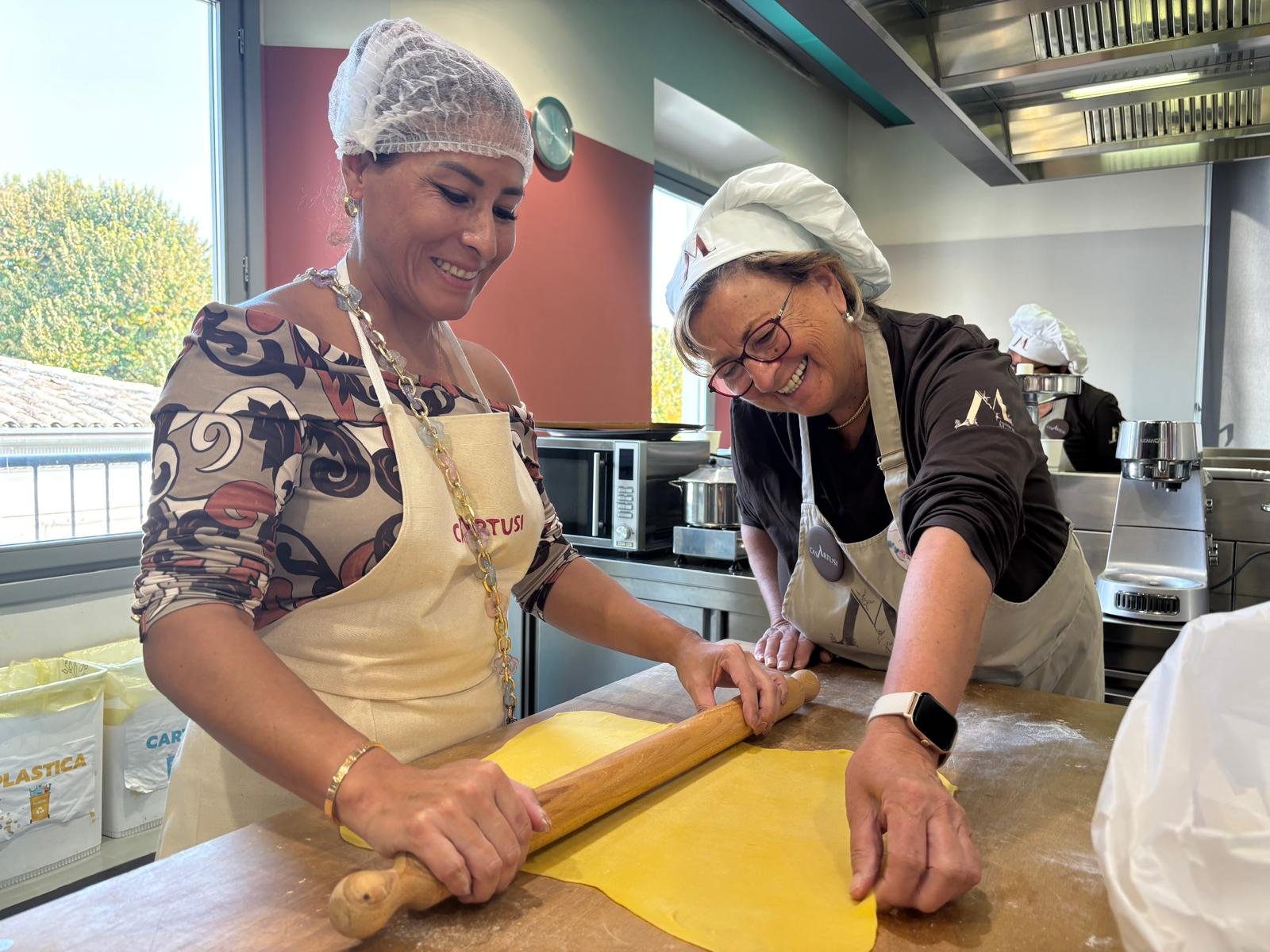
In Italian cuisine, expertise, traditions and rituals of preparing and serving food have been handed down over countless generations, ensuring continuity, identity, and a shared sense of belonging. While it reflects a wide range of diverse influences, it is held together by common values – such as an emphasis on using simple, locally grown ingredients and the frugality of avoiding waste – and evolves through innovation over time.
So why the UNESCO announcement? Among its many activities, UNESCO seeks to foster world peace by promoting the protection and safeguarding of the world's cultural heritage. They believe that “culture enriches our lives in countless ways and helps build inclusive, innovative and resilient communities.” Originally, the cultural preservation was focused on physical sites, but later it was expanded to protect the value of intangible cultural heritage, the living practices of a community, including the knowledge, rituals, traditions, and the people who embody and enact them to create culture.
Therefore, the recent recognition of Italian cuisine is not an award or a ranking, but instead a plan to safeguard and protect its integrity. At the same time it is an acknowledgement that its contribution to the culture is worthy of protection. As part of the UNESCO process, three organizations stepped forward to propose a plan for preserving and sustaining Italian cuisine: Casa Artusi, a longtime collaborator of Esperienza, was among them. We couldn’t be more proud to be associated with the keepers of the flame.
Italo-Americano declares the protection of Italian cuisine to be “a collective achievement: it celebrates the history and strength of Italian culture, because cuisine tells the everyday story of a people shaped by the histories they have encountered, by social change and deep-rooted traditions, by local resources and global influences, and by a shared pleasure in taste and creative innovation, a quality that continues to distinguish Italy and Italians.”