How does Esperienza’s language immersion work?
In a classroom in rural Emilia-Romagna, Italian students are not pouring over a workbook or focused on memorization. They are singing. They clap, laugh, repeat lines, miss words and find them again. A teacher pauses—not to correct, but to ask a question that someone answers in halting Italian. Then another student jumps in.
Later, the group enjoys aperitivo with locals to immerse themselves in the village life and practice their Italian language.
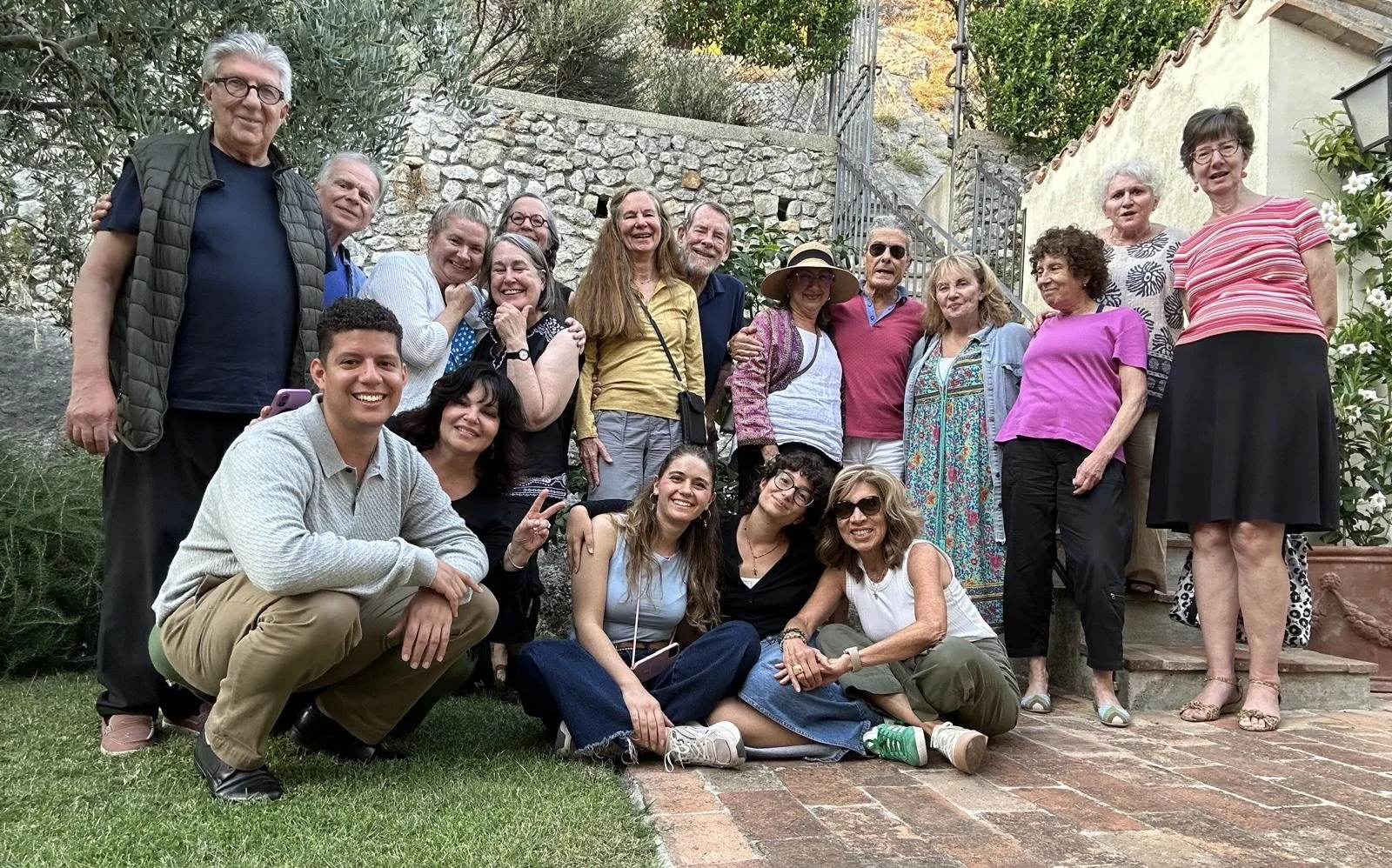
With Esperienza’s “Living the Language” programs, this is how language takes hold: by practicing while engaging the senses, having meaningful exchanges with locals, and diving into the culture. We find that the Italian language isn’t something to master, but to enter into, messy, social, alive.
Our language classes group learners by level. Rather than focusing on drills and lists for memorization (except those students create for themselves), language is introduced through experience. A poem becomes a conversation. A short text turns into role play. Music is used as a tool with its rhythms and phrases helping learners internalize Italian sounds and meaning.
The point is not perfection. It’s participation.
Students speak early, often and imperfectly. Over time, hesitation gives way to instinct.
The village is our classroom.
Our language immersion programs are set in Verucchio and Pennabilli, with a mix of classroom time, field trips and unstructured time for exploring. In these quaint Emilia-Romagna villages, where Esperienza has deep ties, students don’t just visit—they join in daily life. They have opportunities to sit down for coffee with locals, take cooking classes, visit shops and studios, attend performances and participate in everyday exchanges. Communications during these interactions are unscripted and often imperfect. That’s the point.
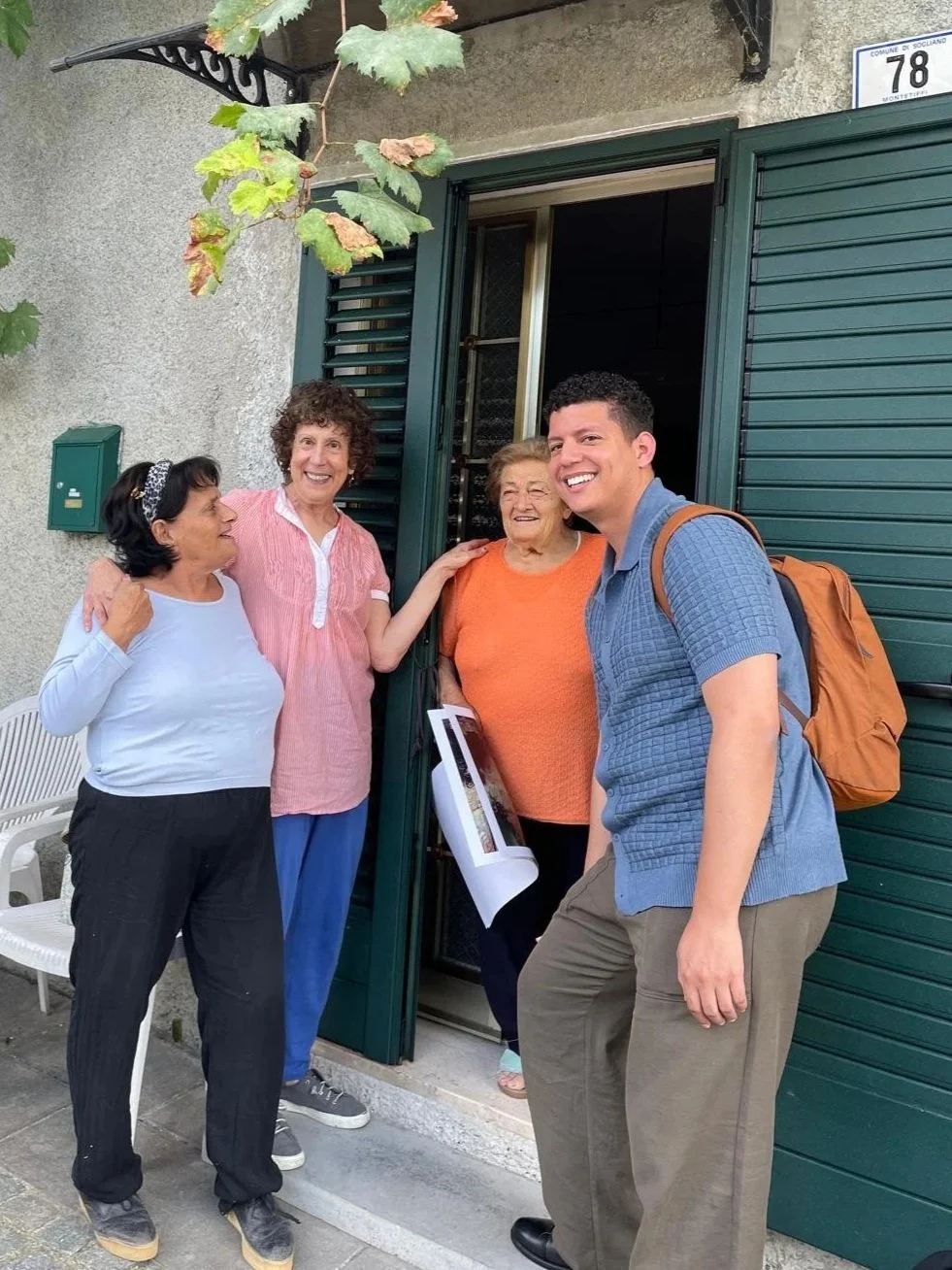
Language becomes a tool for connection not a set of grammar rules.
Esperienza’s approach is grounded in engagement—intellectual, emotional and social. We learn through real-world experiences: conversations, excursions and shared moments that require active use of the language.
Instructors draw on theater, poetry, and music to design sessions that require learners to interpret, respond and create. You’re not memorizing words; you’re integrating them
into your activities. You’re not translating in your head; you’re immersed in the language and the culture.
Because most of the program is conducted in Italian, participants adapt quickly. At first, it can feel disorienting. Then comprehension builds, and confidence follows.
There is also space to explore independently. Walking through the countryside, stopping for gelato or lingering in a piazza are an integral part of the experience. These moments require ordering, asking, listening—and they add up.
By the end of two weeks, participants may not know every grammatical rule. But they can enter conversations, navigate daily interactions, and express meaning with growing ease. They begin to think less about constructing sentences and more about expressing meaning.
In other words, they begin to live the language. And that is the ultimate goal.